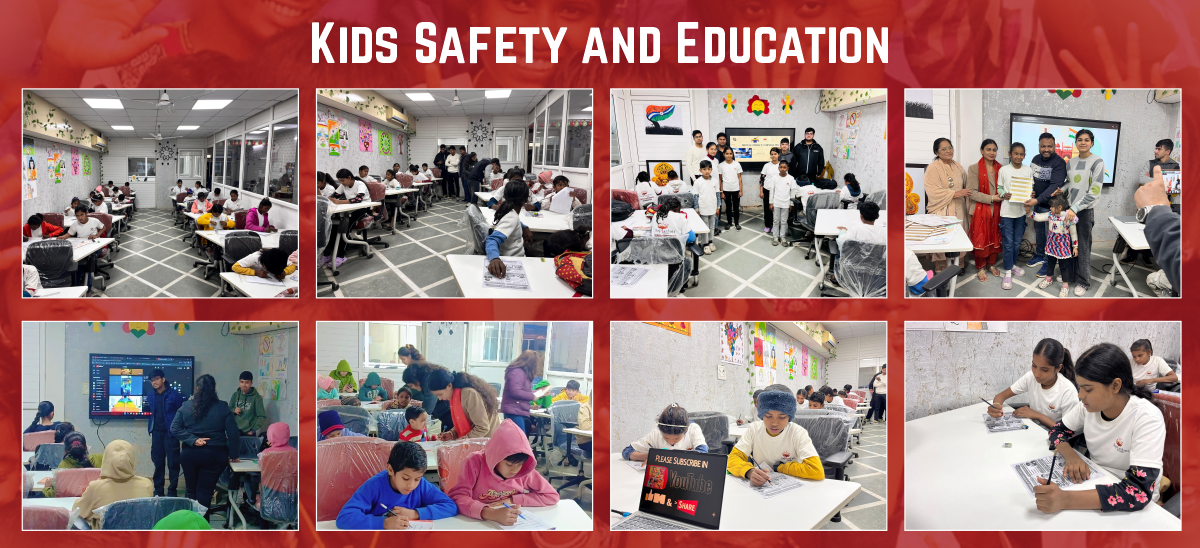
Walk a little away from Dwarka’s main roads and polished societies, and the picture changes quickly. Tin shelters pressed behind boundary walls. Parents juggling inconsistent work. Students who miss school because they’re needed at home. Families living one unexpected expense away from crisis.
This is the version of Dwarka that rarely appears in brochures, and exactly where social-change organizations spend most of their time.
When Learning Depends on Survival
School enrollment isn’t the problem. Attendance and continuity are. A child may attend class for two weeks, then disappear for three. A math concept missed once becomes a permanent gap. The easiest way to avoid embarrassment? Stop showing up.
A grounded NGO’s role here is practical:
- Identify students at slipping points
- Offer consistent evening learning support
- Keep communication open with parents who are tired, not negligent
- Celebrate improvement instead of only chasing grades.
Progress is counted in confidence restored, not press releases.
The need, impact and consequences of women safety
Many women frequently move through routes and public facilities that aren’t built with their safety or comfort in mind. Reporting harassment risks backlash, not protection.
Support must be quiet, accessible, and continuous:
- A known contact for legal or police guidance
- An internal community network that checks in
- Awareness of schemes that can provide mobility and income
- Skill programs scheduled around actual work hours.
Feeling safe often comes down to knowing where to go for support and having your own control over decisions and income.
Health Support Must Start Before the Hospital
Many health issues in Dwarka’s vulnerable communities don’t escalate because help doesn’t exist, but because help is delayed.
Seasonal illnesses left unchecked become chronic. A dental issue becomes a school absence. Simple nutrition gaps turn into long-term weakness.
Small interventions have large consequences:
- Regular camps where people already gather
- Screening that catches issues early
- Awareness that feels relevant, not preachy.
Good helth isn’t charity, it’s what makes education and income even possible.
Trust Is the Real Infrastructure
Anyone can distribute kits once and take photos.Trust only forms when a volunteer shows up again, weeks later, and remembers names.
That trust:
- Opens doors to conversations about abuse
- Keeps children from dropping out quietly
- Helps families approach for help before a crisis explodes.
Without trust, programs are transactions. With trust, programs become community safeguards.
Change Isn’t Linear — It’s Layered
Ask a field worker what success looks like. Their examples won’t be dramatic:
- A child rebuilding a study routine after months of disruption
- A girl insisting she wants to finish 12th despite pressure to work
- A household dividing chores so daughters have time to study
- A mother applying for an identity document she was denied for years.
Why This Work Matters in Urban India
Cities expand faster than their safety nets. Schemes and services are there, but many families either don’t know how to access them or feel unsure about whether they’ll actually get help.
Come, join our mission and help Sandhya Singh!